

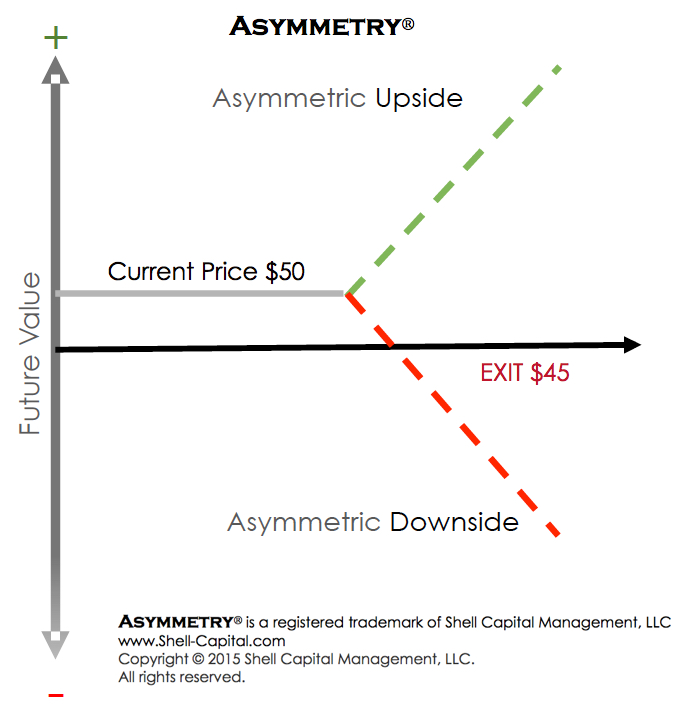
Risk & Reward
Risk and reward are the two fundamental dimensions of every investment decision. Risk is the possibility of losing capital — experiencing an outcome worse than expected. Reward is the potential gain — the positive outcome if the investment succeeds. The relationship between risk and reward is the central issue in investment management: virtually every investment decision involves trading off some level of risk for some level of expected reward, and the quality of that trade-off determines long-term investment success.
The Traditional Risk-Reward Trade-Off
Traditional finance theory holds that risk and reward are positively correlated: higher expected returns come with higher risk. This is the fundamental premise of the Capital Asset Pricing Model and is broadly true as a long-run average. Higher-risk assets (equities vs. treasury bills, small caps vs. large caps, emerging markets vs. developed markets) have historically produced higher average returns — but with larger periodic losses. Accepting more risk is, in this framework, the primary means of achieving higher long-term returns.
The Asymmetric Alternative
The ASYMMETRY® investment philosophy challenges the premise that accepting more risk is the only path to higher returns. By structuring risk asymmetrically — defining maximum losses in advance, cutting losses quickly, and allowing gains to develop — it is possible to earn compelling risk-adjusted returns without proportional exposure to the full downside of any given asset class. The goal is not to eliminate risk but to ensure that the relationship between risk taken and reward earned is asymmetrically favorable — more reward per unit of risk than the simple, symmetric market exposure would provide.