

Category: ASYMMETRY® Observations
-
Gifts are given. Asymmetry comes from choices.
Talent may help investors understand markets, but it rarely determines outcomes. Asymmetric results come from choices—defining downside, sizing positions intentionally, and maintaining convex opportunities within a disciplined portfolio process. Read More
-
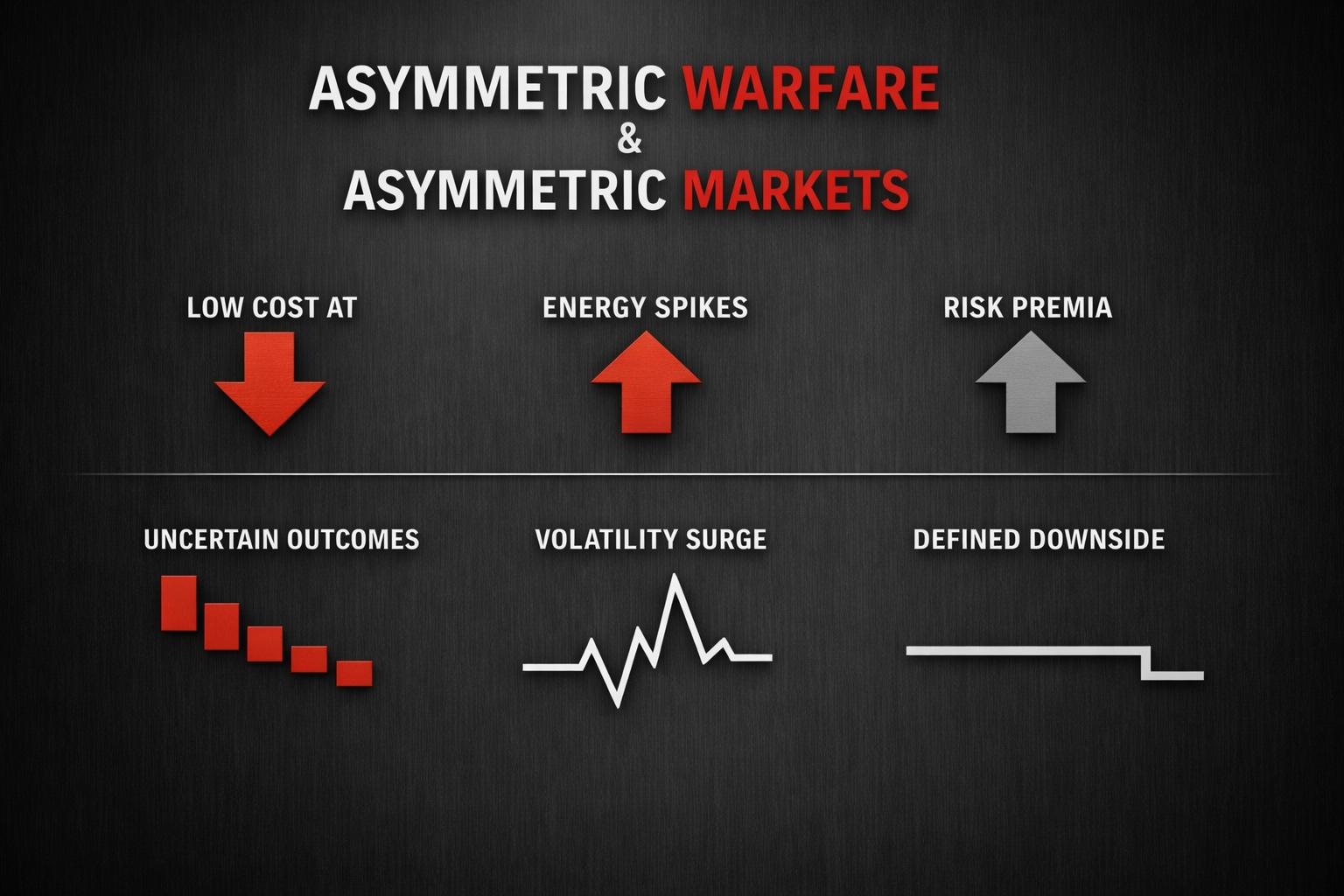
Asymmetric Warfare and Asymmetric Markets
Modern conflicts are asymmetric by design. Markets respond the same way. When pressure concentrates in energy, volatility, and risk premia, capital with consequences requires defined downside and intentional convexity — not prediction. Read More
-
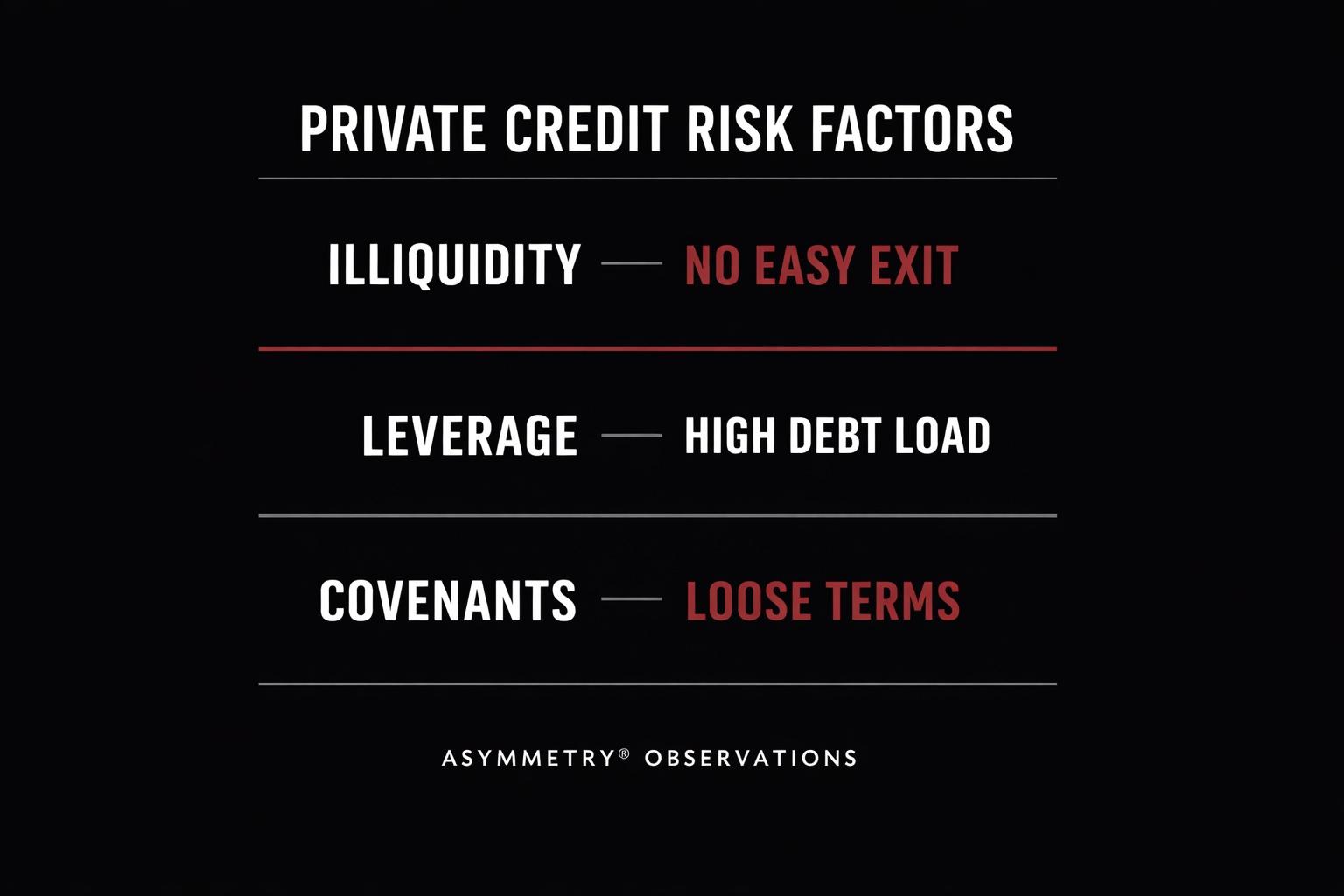
Private Credit and the Illusion of Smooth Returns
Private credit appears stable because it doesn’t reprice daily. But smooth returns don’t eliminate risk — they defer it. In a higher-rate regime with tightening liquidity, the asymmetry inside private credit is shifting. The real… Read More
-

Iran, Energy Chokepoints, and the Asymmetry of Geopolitical Risk
Iran only becomes a market event when it becomes an energy event. The Strait of Hormuz is the transmission mechanism. From there, inflation expectations, interest rate probabilities, equity multiples, and credit spreads reprice—often nonlinearly. Read More
-
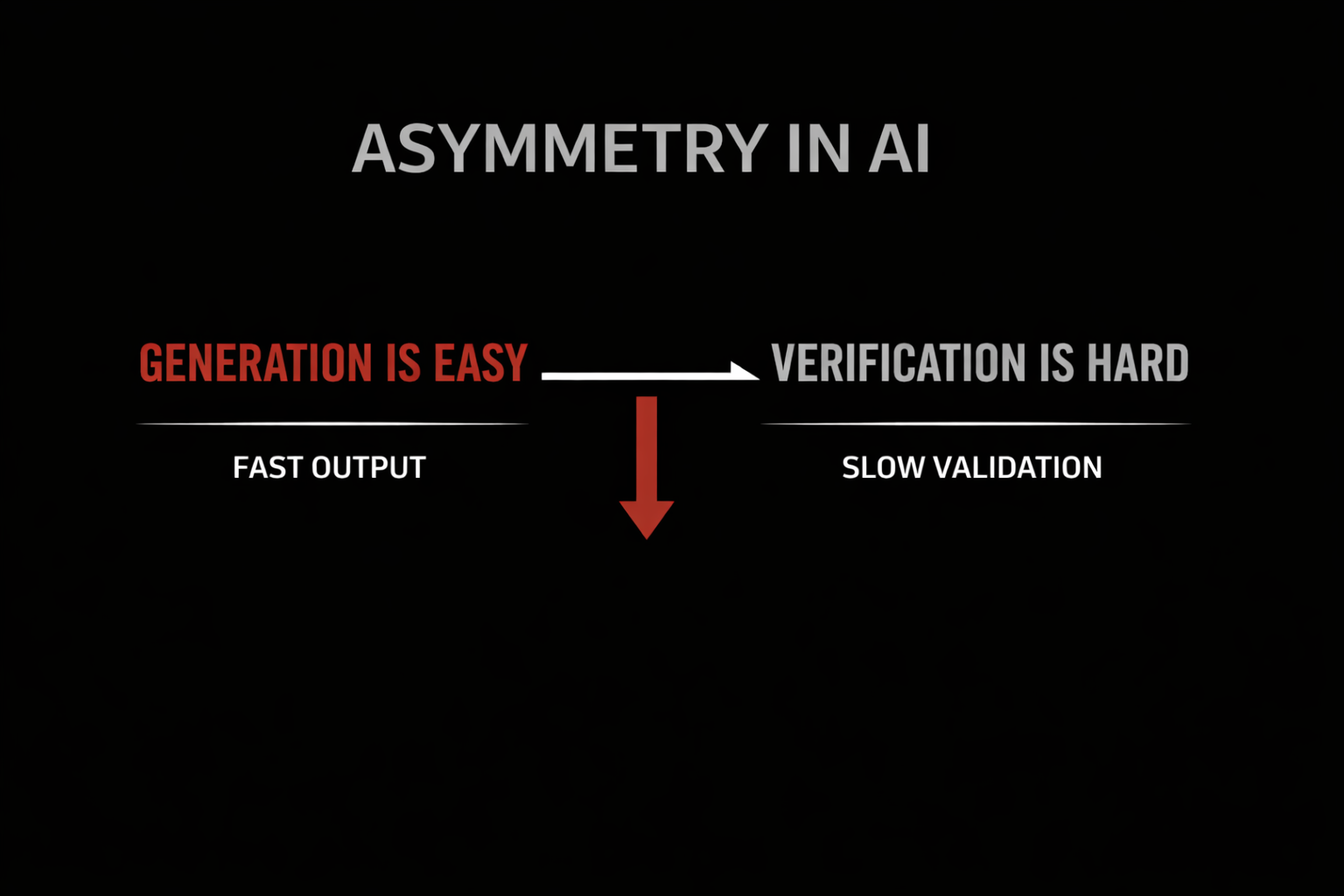
Asymmetry in AI: When Generation Is Cheap and Verification Is Expensive
AI can generate answers instantly, but verifying correctness is often harder than producing the output. In investing, idea generation is easy. Defined downside risk is what creates asymmetric outcomes. Read More
-

Valuation Extremes and the Compression of Asymmetry
Valuation is not a timing signal. It is a distribution signal. When starting points are stretched, expected forward returns compress and downside asymmetry expands. The discipline is structural, not predictive. Read More
-

Heads I Win, Tails I Don’t Lose Much
“Heads I Win, Tails I Don’t Lose Much” is a portfolio management framework focused on asymmetric risk/reward, defined downside, convexity, and percentage-based portfolio risk control. Read More
-

What Stanley Druckenmiller Actually Means by “Rate of Change” — And Why It’s the Foundation of Asymmetric Risk Management
Most investors watch price and call it analysis. More sophisticated investors watch momentum. Very few monitor the change in momentum itself — the acceleration, the second derivative, the variable that often shifts before price confirms… Read More
-
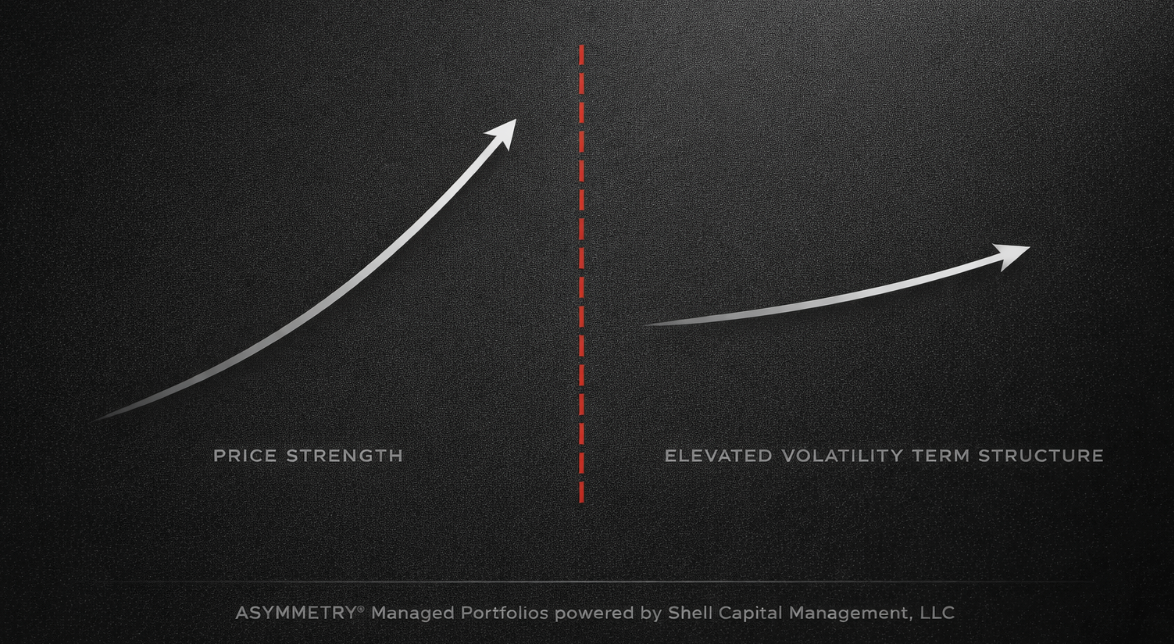
The Market Can’t Hide Its Nervous System
When the S&P 500 approaches all-time highs but volatility remains elevated, price and structure diverge. This ASYMMETRY® Observation explains why volatility is the market’s nervous system — and how disciplined risk management creates asymmetric opportunity. Read More
-
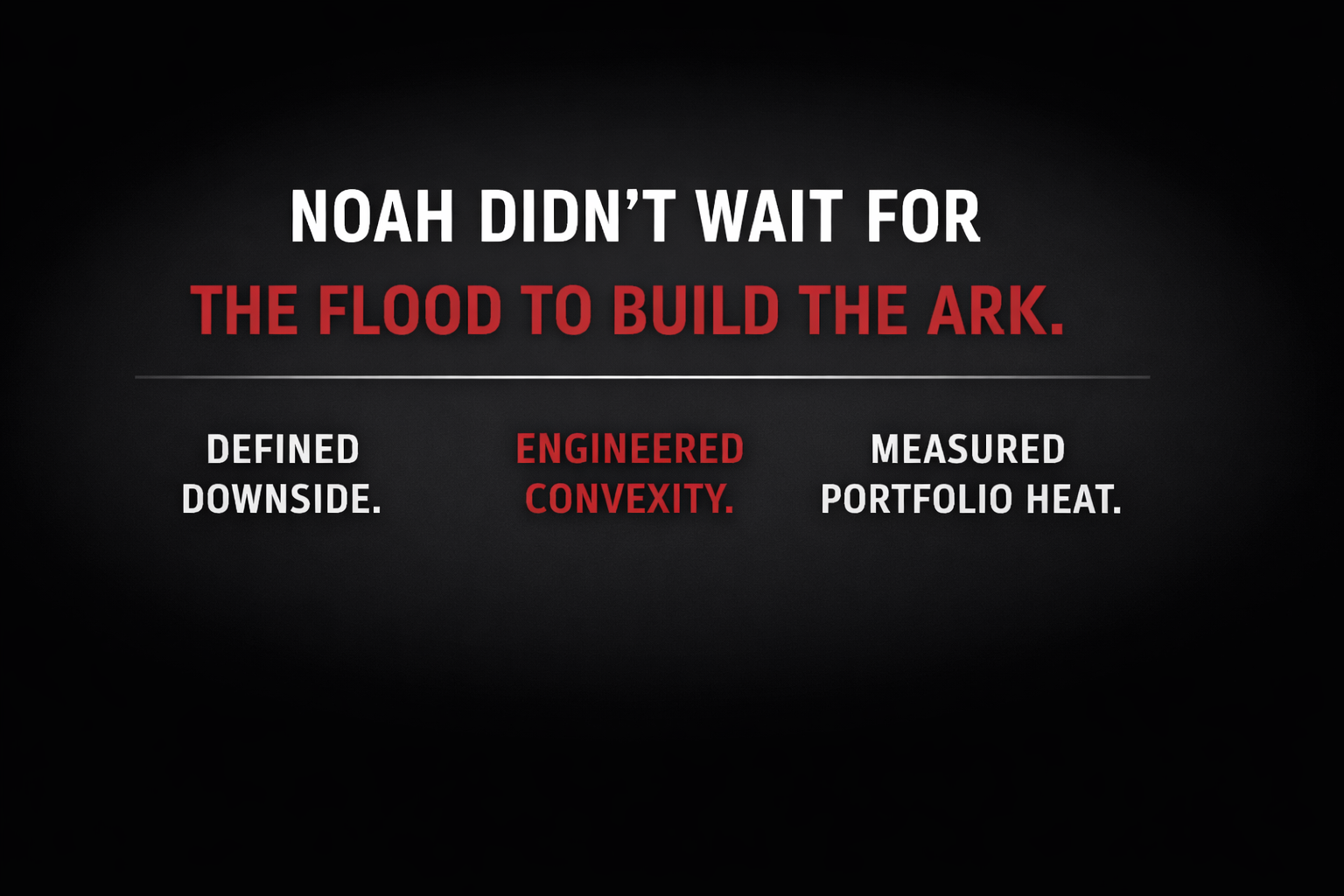
Noah didn’t wait for the flood to build the ark.
Noah didn’t wait for the flood to build the ark. This ASYMMETRY® Observation explains why defined downside, convexity, and measured portfolio risk must be engineered before market stress begins. For business owners and families managing… Read More