

Category: ASYMMETRY® Observations
-

Why Record Demand for 30-Year Treasuries Matters
When investors lock in money for 30 years at record levels, it isn’t noise. It’s a signal about inflation expectations, long-term growth, and how serious capital is positioning for regime shifts. Read More
-

The Most Dangerous Assumption Is the Old World Still Exists
Ray Dalio argues the post-1945 world order is breaking down. The real risk isn’t war tomorrow—it’s building portfolios for a world that no longer exists. Read More
-
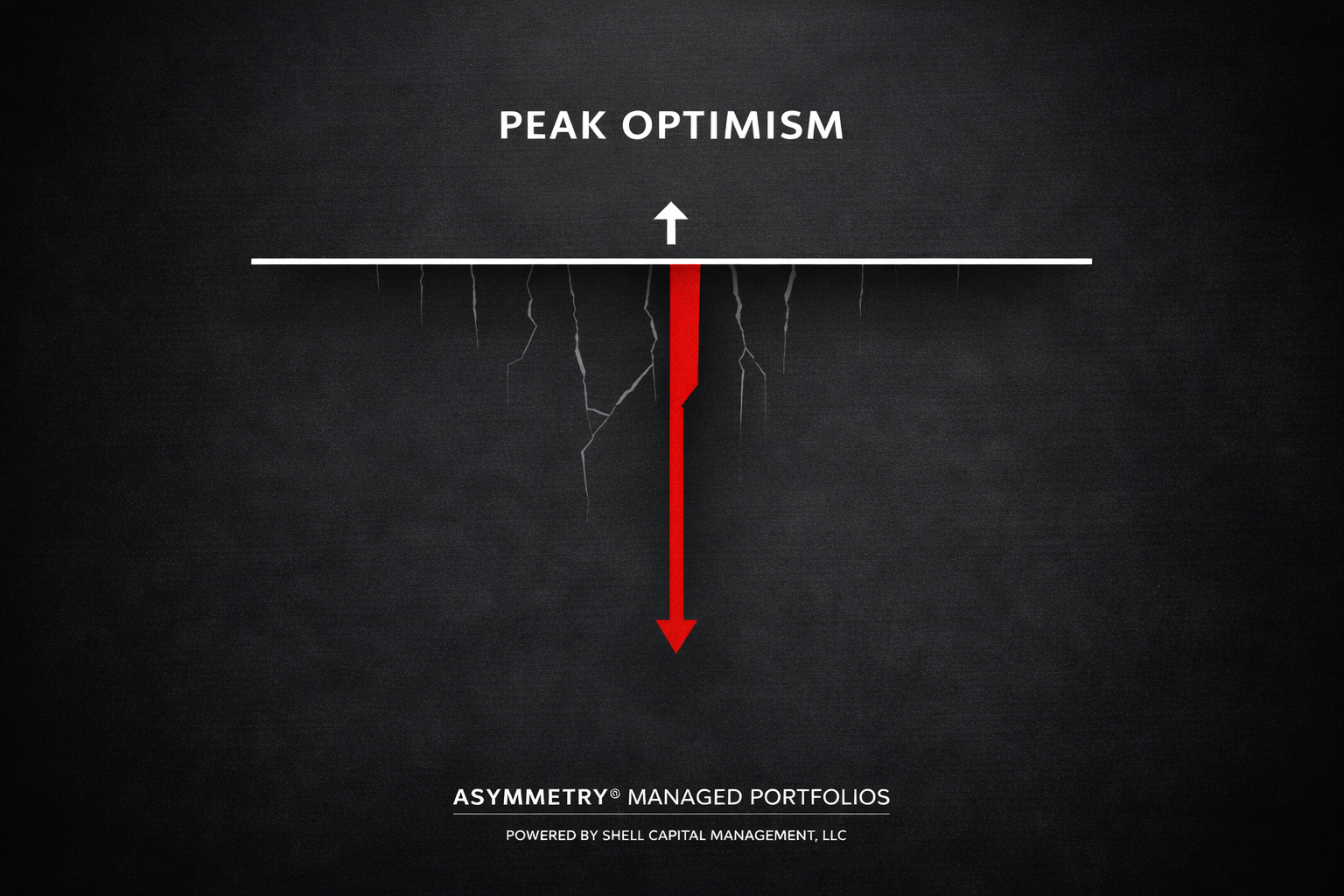
The Most Dangerous Asset Is Optimism
Markets don’t top on bad news. They top on good news that’s fully believed. The real risk at peak optimism isn’t volatility — it’s deploying meaningful capital into consensus when upside is already priced and… Read More
-
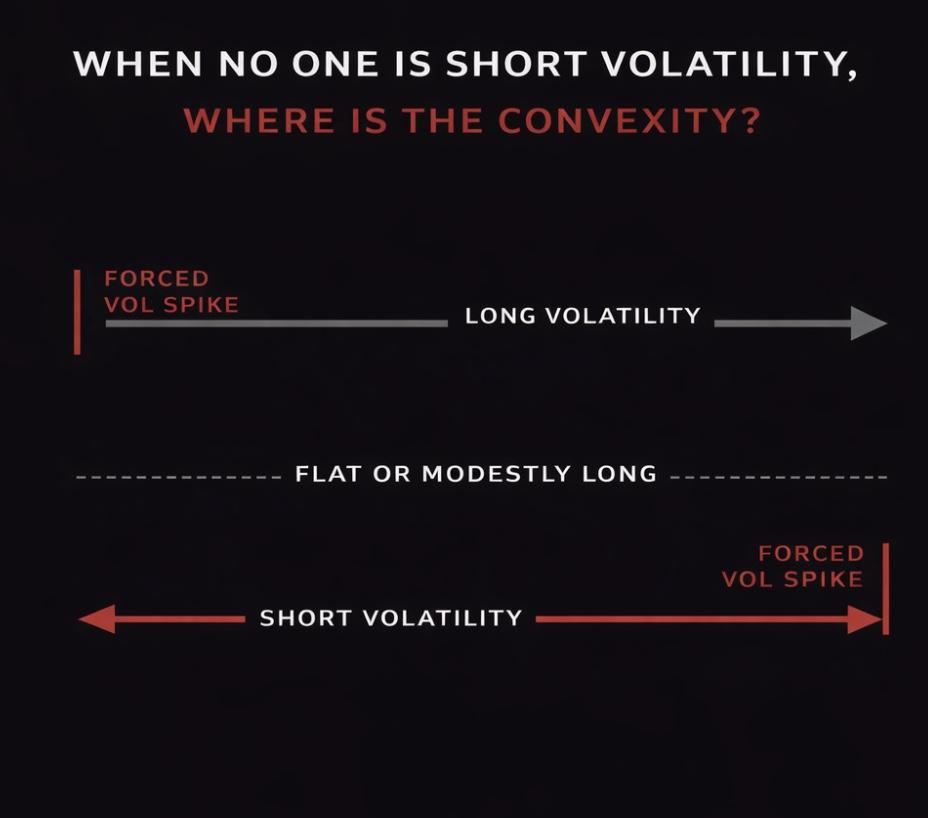
When No One Is Short Volatility, Where Is the Convexity?
When asset managers are heavily short volatility, volatility spikes can become reflexive and explosive. Today, that structural short positioning has largely disappeared. The asymmetry in long-volatility trades may not be what most assume. Read More
-

The Three Dimensions of Risk — And How We Engineer Around Them
Risk isn’t a single score — it’s the interaction between risk tolerance, risk required, and risk capacity. At Shell Capital, we engineer portfolios by aligning psychological comfort, return objectives, and financial absorption ability to create… Read More
-
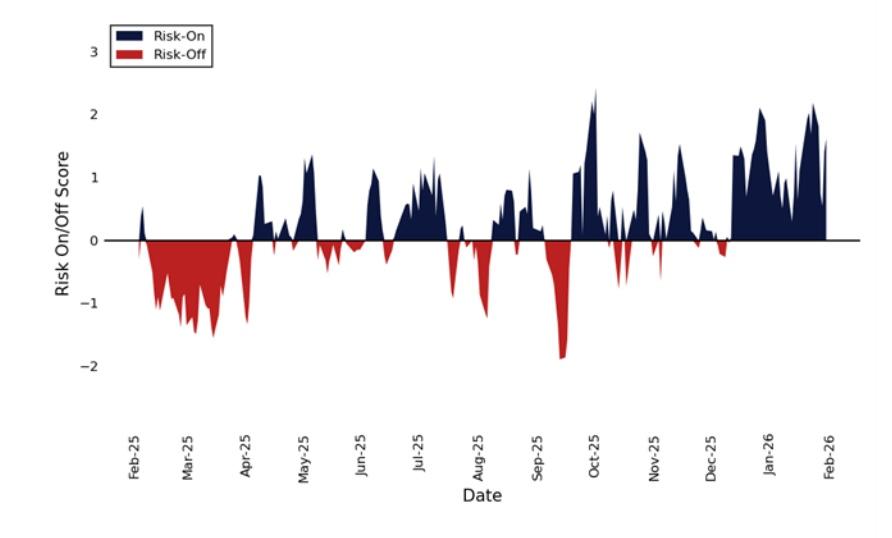
When Enthusiasm Crowds One Side of the Boat
Retail risk appetite has reached the 95th percentile, according to Citadel Securities’ order flow data. Extremes in positioning don’t predict timing, but they do change the distribution of potential outcomes — and the structure of… Read More
-

Optionality Is An Edge Behind Asymmetric Payoffs
A recent New York Times article highlighted academic research showing prediction markets rival professional economists and Wall Street analysts in forecasting accuracy. The structural edge isn’t intelligence — it’s optionality, incentives, and probabilistic discipline. Read More
-

The Treadmill Isn’t About Income. It’s About Control.
Financial freedom isn’t about income levels—it’s about control. This ASYMMETRY® Observation reframes the classic four-quadrant model as levels of dependency, resilience, and optionality, showing why getting off the treadmill is a risk-management decision, not a… Read More
-
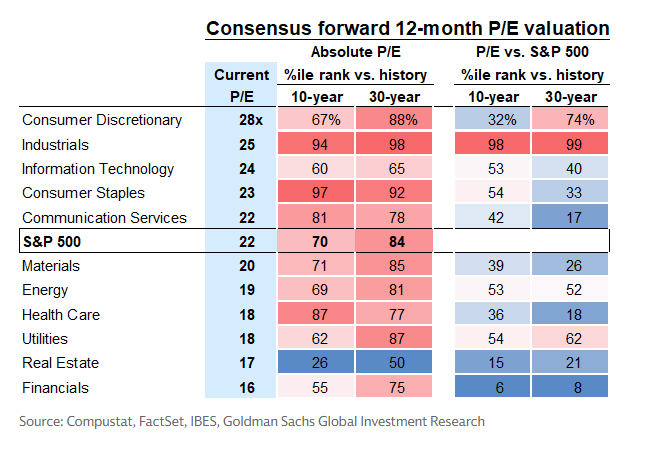
Valuation Doesn’t Predict Returns. It Changes the Shape of Risk
This Goldman Sachs valuation table doesn’t predict market returns. It reveals fragility. When expectations rise across sectors, portfolio structure matters more than forecasts. Read More
-
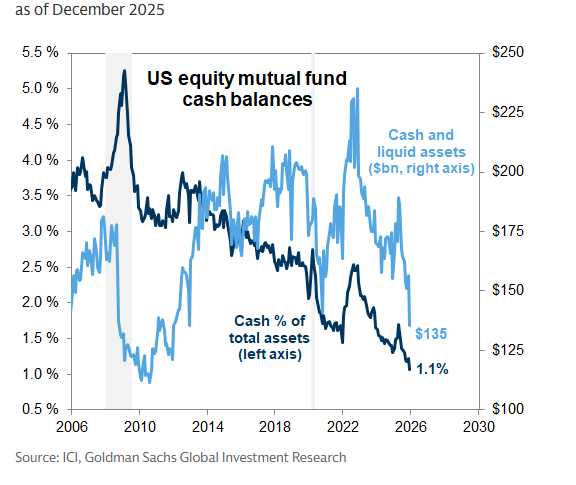
The Most Crowded Trade No One’s Talking About: Being Fully Invested
U.S. equity mutual fund cash balances are near historic lows. When cash disappears from the system, optionality disappears with it—changing how markets behave, how risk compounds, and why downside becomes more dangerous than most investors… Read More