
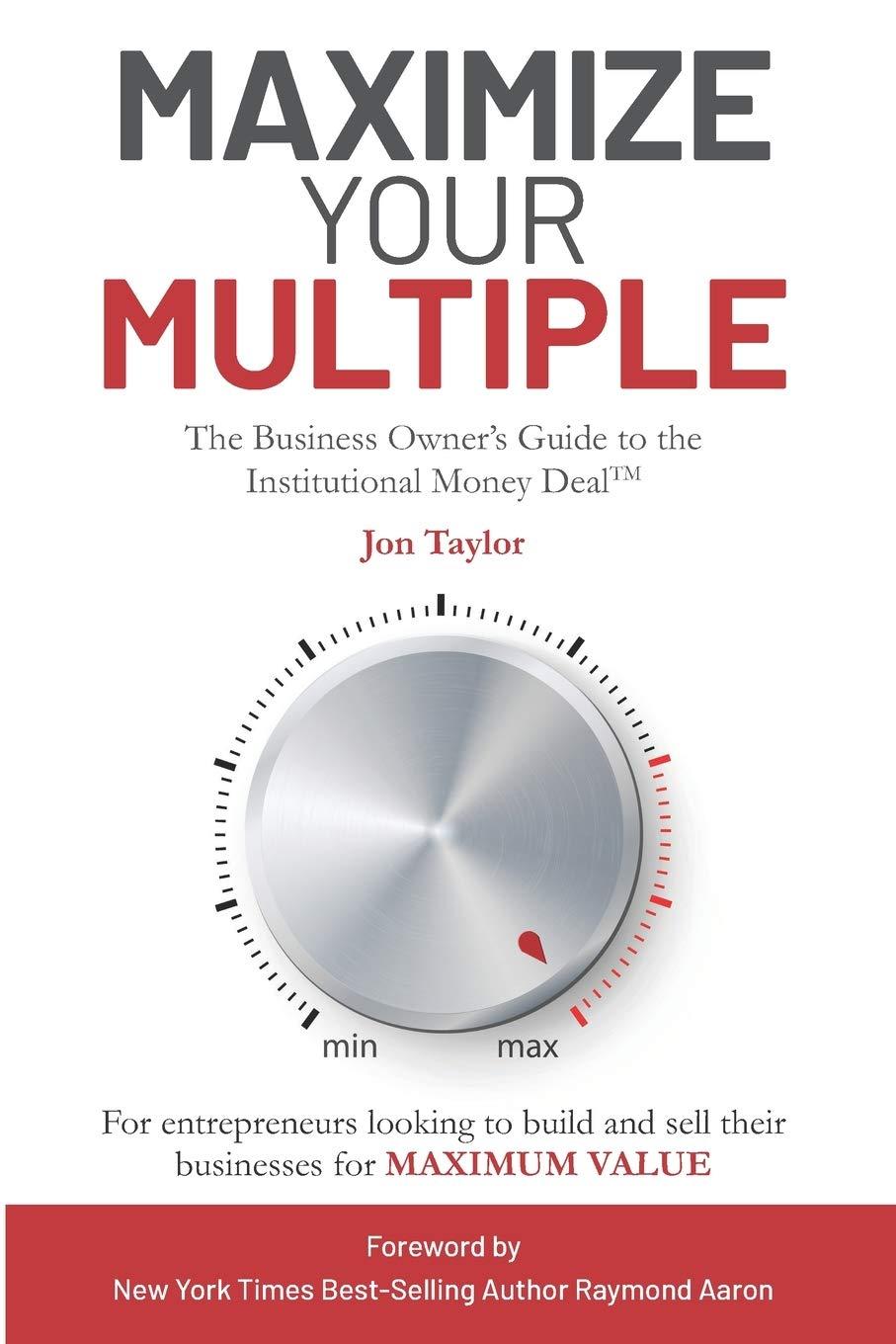
Maximize Your Multiple: The Business Owner’s Guide to the Institutional Money Deal - For entrepreneurs looking to build and sell their businesses for maximum value
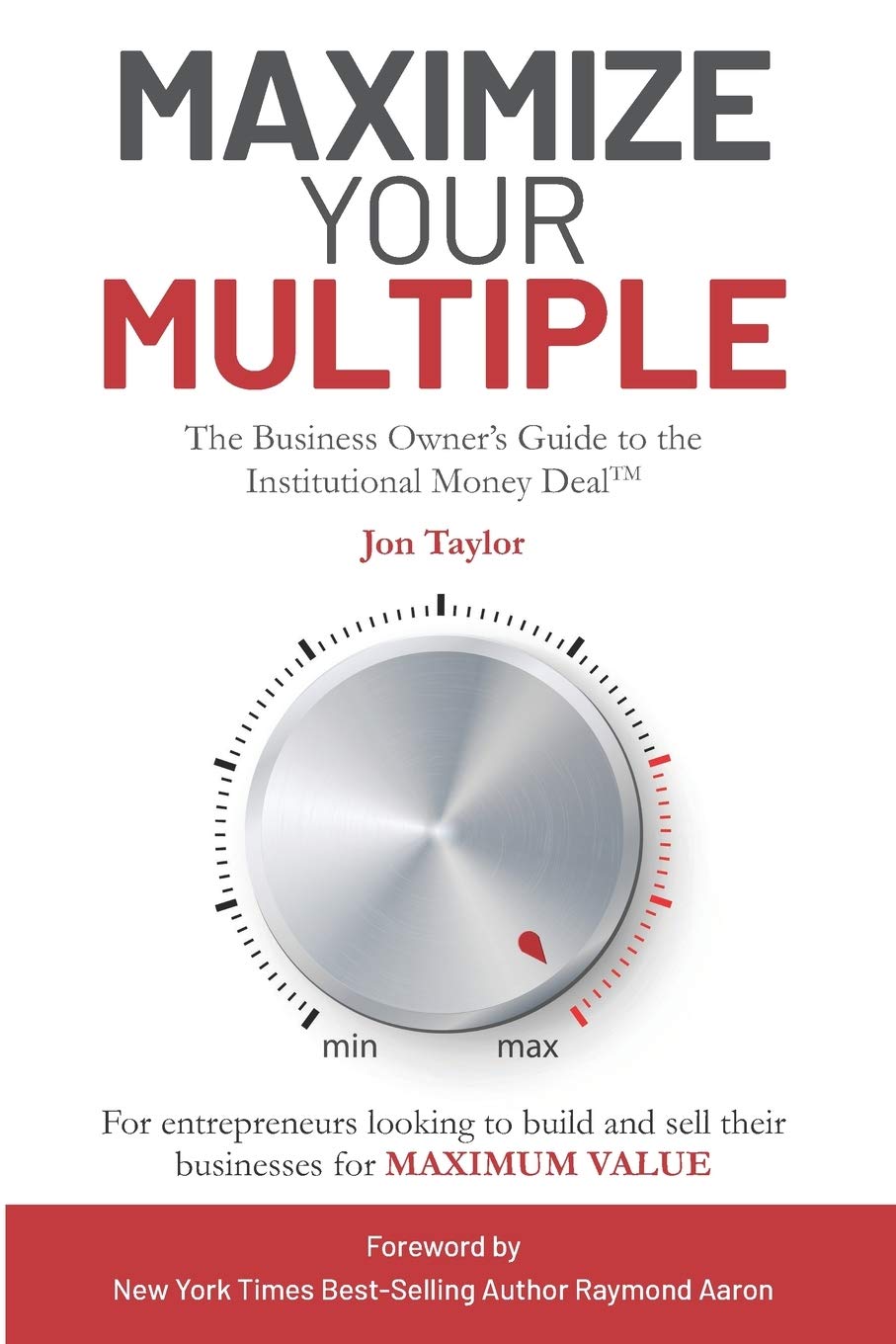
Maximize Your Multiple: The Business Owner’s Guide to the Institutional Money Deal - For entrepreneurs looking to build and sell their businesses for maximum value by Jon Taylor
What the book says
Jon Taylor’s Maximize Your Multiple is written for business owners who want to sell their companies not just for a “good” price, but at institutional-grade valuations. The core thesis is simple but uncomfortable: most owners think they are selling a business, while institutional buyers are buying a risk-adjusted cash flow stream inside a scalable system. The multiple is not negotiated at the finish line; it is engineered years in advance through structure, governance, predictability, and optionality.
Introduction: Why some businesses earn premium multiples and others don’t Taylor opens by reframing valuation as a function of perceived risk, not owner effort or emotional attachment. Institutional capital does not pay for history; it pays for future cash flows it can underwrite with confidence. Owners who maximize multiples stop thinking like operators and start thinking like capital allocators preparing an asset for professional buyers.
Chapter 1: Understanding how institutional buyers think This chapter explains the mindset of private equity firms, family offices, and strategic acquirers. These buyers are portfolio managers, not entrepreneurs. They care about durability of earnings, downside protection, and scalability across platforms. A higher multiple is the reward for reducing uncertainty, not for faster growth alone. Businesses that depend too heavily on the founder, a single customer, or informal processes are discounted regardless of recent performance.
Chapter 2: The multiple is a risk equation, not a reward Taylor breaks down how buyers translate operational risk into valuation discounts. Customer concentration, key-person risk, weak financial controls, and inconsistent margins all compress multiples. Owners who want premium outcomes must systematically remove or hedge these risks. This chapter is pivotal because it shifts the owner’s focus from “how fast can I grow?” to “how predictable and transferable is this enterprise?”
Chapter 3: Building institutional-quality financials Here, Taylor emphasizes clean, credible, and auditable financial reporting. Accrual accounting, normalized EBITDA, clear add-backs, and consistent KPIs are not optional for institutional buyers. Sloppy or opaque financials increase perceived risk and reduce buyer confidence, which directly lowers valuation. Transparency is treated as a form of capital.
Chapter 4: Management teams and the removal of owner dependency This chapter addresses one of the biggest multiple killers: founder-centric businesses. Institutional capital pays more when leadership is distributed, incentives are aligned, and decision-making is repeatable. Taylor argues that the owner’s job is to design a system that performs without them, even if they plan to stay post-transaction. Independence from the owner creates transferability, and transferability creates leverage in negotiations.
Chapter 5: Process, systems, and scalability Taylor explains how documented processes, operating playbooks, and scalable systems reduce execution risk. Buyers want to know that growth can be replicated, not reinvented. A business that scales through systems earns a higher multiple than one that scales through heroics. This is where operational excellence becomes a valuation strategy.
Chapter 6: Growth quality matters more than growth speed Not all growth is valued equally. Taylor distinguishes between organic, repeatable growth and growth driven by price hikes, one-off contracts, or unsustainable tactics. Institutional buyers pay for growth they believe will persist. Volatile or low-quality growth increases uncertainty and can actually lower the multiple despite higher revenues.
Chapter 7: Creating strategic optionality One of the most important chapters focuses on optionality. Businesses that appeal to multiple buyer types create competitive tension, which expands valuation ranges. Taylor shows how positioning, market focus, and strategic fit can open multiple exit paths rather than a single buyer narrative. Optionality shifts negotiating power toward the seller.
Chapter 8: Preparing for diligence before it begins Taylor stresses that diligence is not an event but a process that starts years before a sale. Legal structure, contracts, compliance, and documentation should be continuously prepared as if a buyer were already reviewing the business. Fewer surprises mean lower perceived risk, faster closes, and better terms.
Chapter 9: The deal structure matters as much as the headline price This chapter explains how earnouts, rollover equity, seller notes, and incentives affect true outcomes. Taylor cautions owners against focusing solely on the headline multiple while ignoring risk embedded in structure. A slightly lower multiple with cleaner terms can produce superior risk-adjusted results.
Chapter 10: Timing, preparation, and market context Taylor closes by emphasizing that the best exits are rarely rushed. Owners who prepare early gain flexibility on timing, allowing them to sell into strength rather than necessity. The ability to wait is itself a form of leverage.
Overall book summary
Maximize Your Multiple is fundamentally a risk-reduction manual disguised as a valuation guide. Jon Taylor makes the case that premium exits are engineered through years of intentional design, not last-minute optimization. The book demystifies how institutional capital thinks and gives owners a roadmap for transforming a lifestyle or founder-driven company into an investable asset with durable, transferable cash flows.
The ASYMMETRY® perspective
From an asymmetric investment lens, Taylor’s framework is about reshaping payoff geometry. Most business owners unknowingly operate in a negatively asymmetric position: years of concentrated effort with a single, binary liquidity outcome exposed to operational and market risk. By reducing downside risks and increasing strategic optionality, owners convexify their exit profile. Limited downside through preparation and risk control allows uncapped upside through competitive tension and institutional demand.
In ASYMMETRY® terms, maximizing the multiple is not about forecasting who will buy the business, but about engineering conditions where many buyers can buy it. Optionality, predictability, and transferability act like embedded call options on valuation. The owner’s job is to define and limit downside risks so upside outcomes are no longer linear, but asymmetric.
This mirrors institutional portfolio construction. Capital flows to assets with controlled downside, repeatable processes, and scalable return drivers. Business owners who adopt this mindset stop being single-asset operators and start behaving like portfolio managers preparing an asset for institutional capital allocation.
Who this book is for
This book is best suited for founders and business owners with $2M+ EBITDA who are contemplating a sale in the next three to ten years, particularly those targeting private equity or institutional buyers. It is especially relevant for owners who want to professionalize their businesses before a liquidity event rather than gamble on timing or market cycles.
Disclaimer: This summary is an independent analysis for educational purposes only and is not affiliated with or endorsed by the author or publisher