
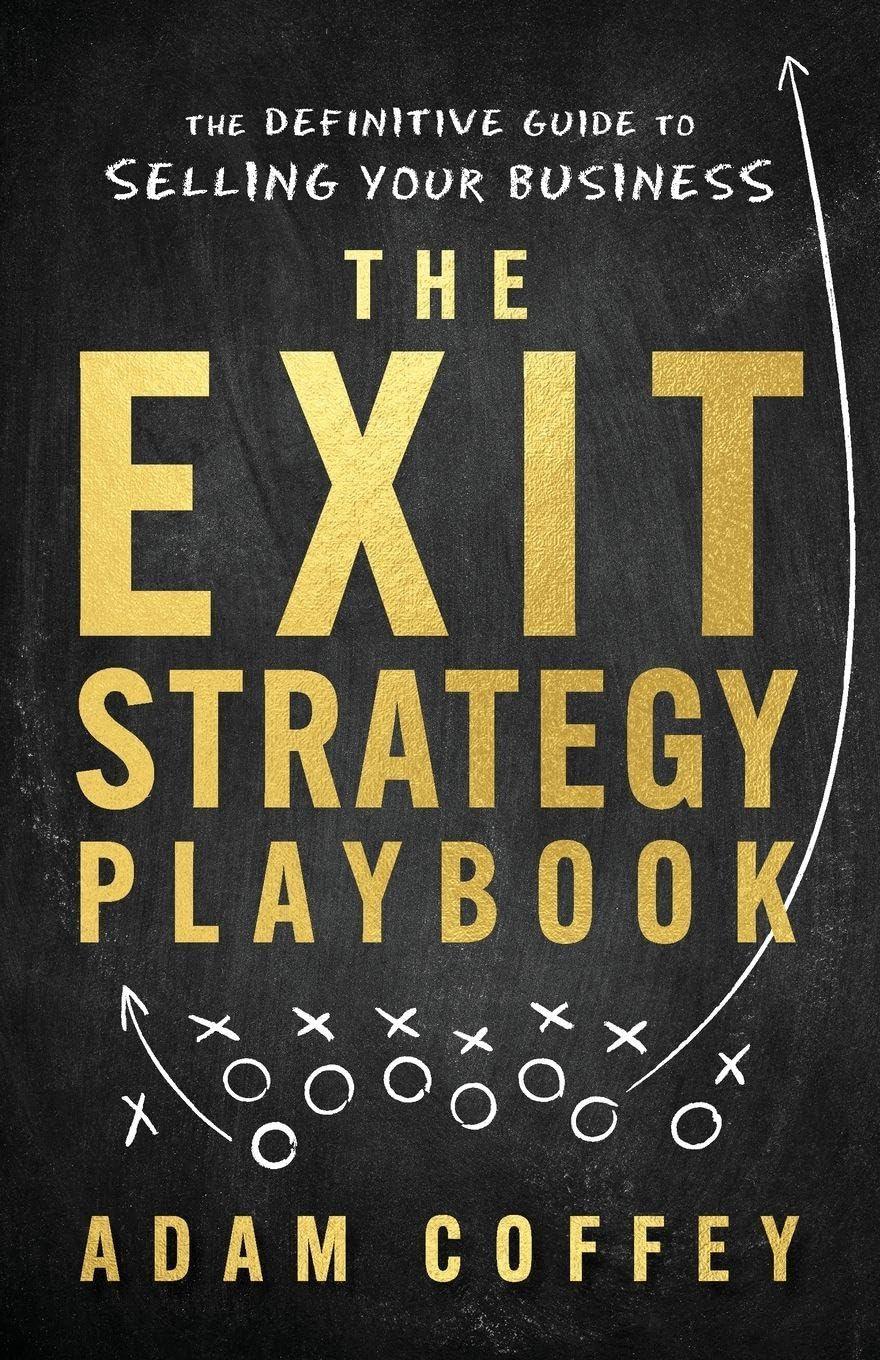
The Exit‑Strategy Playbook
The Exit‑Strategy Playbook by Adam Coffey
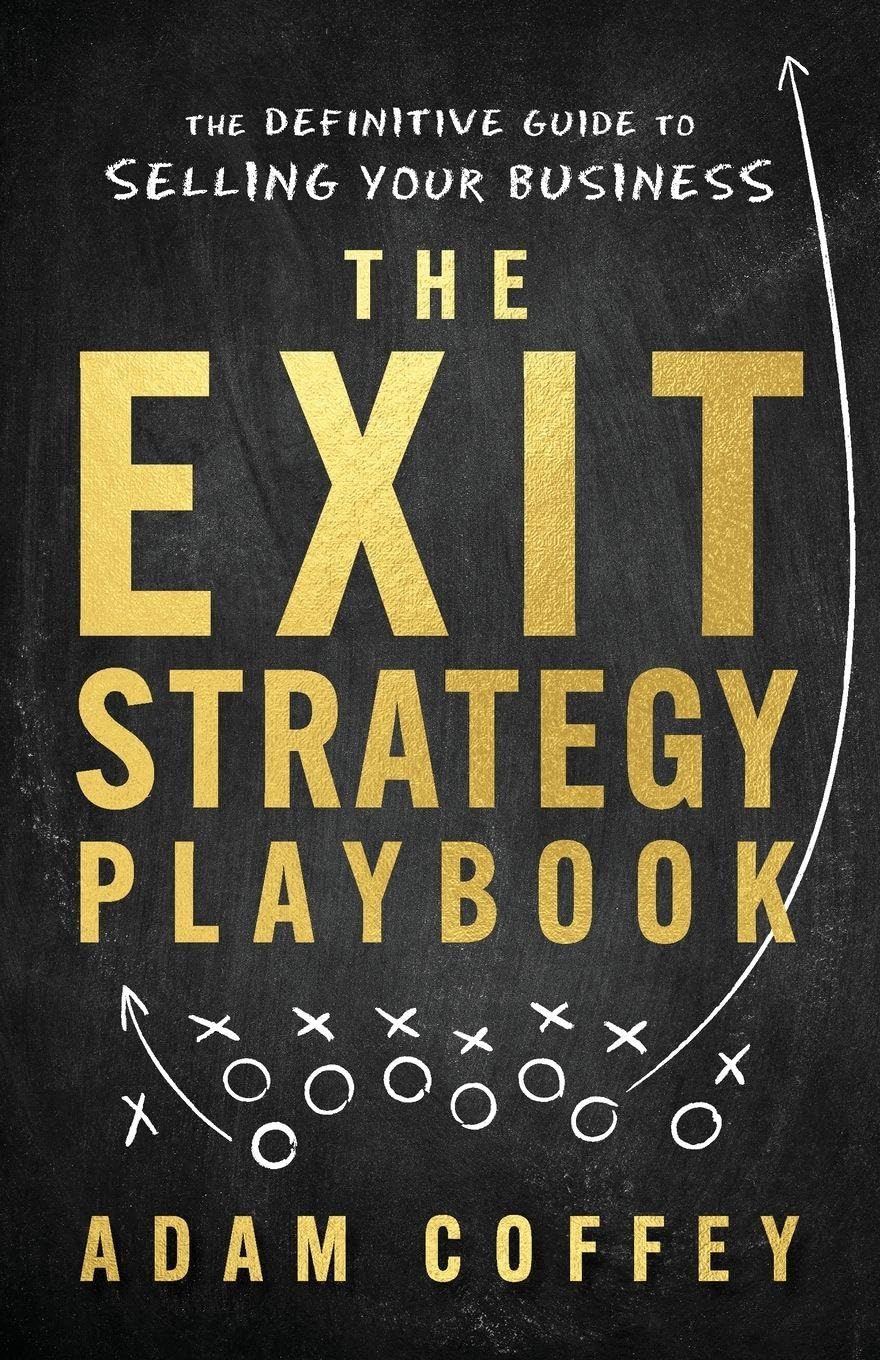
Overall summary
The Exit-Strategy Playbook is a practical, operator-level guide to selling a business, written by a career private-equity executive who has been involved in dozens of acquisitions, integrations, and exits. Coffey’s core premise is that a successful exit is not an event but a multi-year process that must be engineered intentionally. Business owners who treat exit planning as a late-stage transaction problem typically experience value leakage, limited optionality, and unfavorable deal terms. Owners who prepare early, professionalize operations, and create multiple paths to liquidity preserve negotiating leverage and maximize enterprise value.
The book demystifies how buyers actually think, how valuation is formed in practice, and how risk is priced. Coffey emphasizes repeatability, predictability, and transferability of cash flows as the real drivers of value. Throughout the book, he reframes selling a business as a risk-management exercise: removing single-point dependencies, smoothing earnings volatility, and converting owner-centric businesses into scalable enterprises that can survive without the founder.
Chapter summaries
Chapter 1: Why most business owners get exits wrong Coffey opens by highlighting a structural asymmetry between founders and professional buyers. Owners often sell once in a lifetime; buyers transact repeatedly. This experience gap leads to misaligned expectations, emotional decision-making, and avoidable mistakes. The chapter establishes that exits fail not because markets are unfair, but because owners underestimate preparation time and overestimate what buyers value.
Chapter 2: Understanding the buyer mindset This chapter explains how private equity firms, strategic acquirers, and family offices evaluate opportunities. Buyers are not buying a story; they are buying risk-adjusted future cash flows. Coffey walks through how buyers identify concentration risk, customer dependency, margin instability, and management gaps, and how each of these reduces valuation or increases earn-outs and holdbacks.
Chapter 3: Valuation is about risk, not just EBITDA Coffey reframes valuation as a function of perceived downside risk. Two companies with identical EBITDA can command radically different multiples depending on earnings durability, customer diversification, and systems maturity. This chapter clarifies why reducing risk often increases value more effectively than chasing short-term revenue growth.
Chapter 4: Building a company that can run without you Founder dependence is one of the largest exit discounts. Coffey emphasizes leadership development, documented processes, and delegated decision-making. Businesses that rely on the owner for sales, relationships, or daily operations are less transferable and therefore less valuable.
Chapter 5: Financial discipline and clean reporting Here, Coffey focuses on the importance of institutional-grade financials. Accrual accounting, consistent metrics, and clean separation of personal expenses are prerequisites for serious buyers. Sloppy reporting increases diligence friction and creates leverage for price reductions late in the deal.
Chapter 6: Customer, supplier, and revenue concentration This chapter addresses concentration risk as a valuation killer. Coffey explains how buyers haircut value when a small number of customers, suppliers, or contracts dominate revenue. The chapter provides guidance on gradually diversifying revenue streams well ahead of a sale.
Chapter 7: Timing the market and the business cycle Coffey cautions against waiting for “perfect” conditions. Instead, he argues owners should focus on internal readiness and optionality. Markets change, but a prepared business can transact across multiple environments. Optionality, not prediction, is the advantage.
Chapter 8: Choosing advisors and running a process This chapter covers investment bankers, brokers, attorneys, and accountants, emphasizing that advisors must be aligned with the owner’s goals and timeline. Coffey outlines how a competitive process creates leverage and why a single-buyer negotiation often leads to inferior outcomes.
Chapter 9: Letters of intent, diligence, and deal traps Coffey breaks down the LOI and diligence process, highlighting where value is most often lost. Retrades, working-capital adjustments, and earn-out structures are explained clearly, with an emphasis on understanding downside exposure before signing.
Chapter 10: Life after the exit The final chapter addresses post-liquidity realities. Coffey notes that many owners struggle after selling because they planned financially but not psychologically. A successful exit includes clarity about purpose, reinvestment strategy, and personal identity beyond the business.
What the book says, distilled
The central message is that exits reward preparation, not optimism. Value is created by systematically removing business risk and increasing transferability long before a transaction begins. Owners who treat exit planning as a strategic discipline gain leverage, flexibility, and better outcomes.
The ASYMMETRY® perspective: how this applies to asymmetric investment returns and exit planning
From an ASYMMETRY® lens, Coffey’s framework is fundamentally about engineering convex outcomes. Exit planning reduces left-tail risk while preserving upside optionality. By lowering operational and earnings volatility, owners compress downside outcomes while expanding the range of favorable buyer responses.
The asymmetry is clear. Downside risk is capped by preparation: clean financials, diversified revenue, and management depth reduce the probability of a bad exit. Upside remains uncapped because multiple buyer types, competitive processes, and favorable cycles can reprice the same cash flows at higher multiples. This mirrors asymmetric portfolio construction, where risk is defined and limited so upside can compound.
Coffey’s emphasis on optionality is especially relevant. Owners who build a business capable of being sold, recapitalized, or retained create multiple paths to liquidity. Optionality increases negotiating leverage in the same way diversified return drivers increase portfolio resilience. The exit is not a binary bet; it becomes a managed exposure with favorable skew.
For private-wealth planning, the book reinforces a critical idea: business risk is often the largest concentrated risk on an owner’s balance sheet. Exit readiness is not just about maximizing sale price, but about converting an illiquid, high-risk asset into diversified, risk-managed capital at the right time and on favorable terms.
How it applies to business owners planning to sell
For owners considering a sale in three to ten years, this book provides a blueprint for transforming a closely held business into an institutional-grade asset. It encourages early coordination between operational strategy, tax planning, and post-exit investment strategy so that liquidity events translate into long-term financial asymmetry rather than reinvestment mistakes.