
Staging Liquidity for the Retirement Transition
The transition into retirement is not just a shift in income. It is a shift in liquidity needs.
During accumulation, liquidity is often secondary. Income from work covers expenses, and long-term assets can remain invested.
That dynamic changes at retirement.
The portfolio begins to support spending. This introduces the need for accessible capital that is not dependent on market conditions.
The common mistake is entering retirement without sufficient liquidity segmentation.
When liquidity is not structured intentionally, withdrawals may need to come from assets exposed to volatility. This increases the risk of selling during unfavorable conditions.
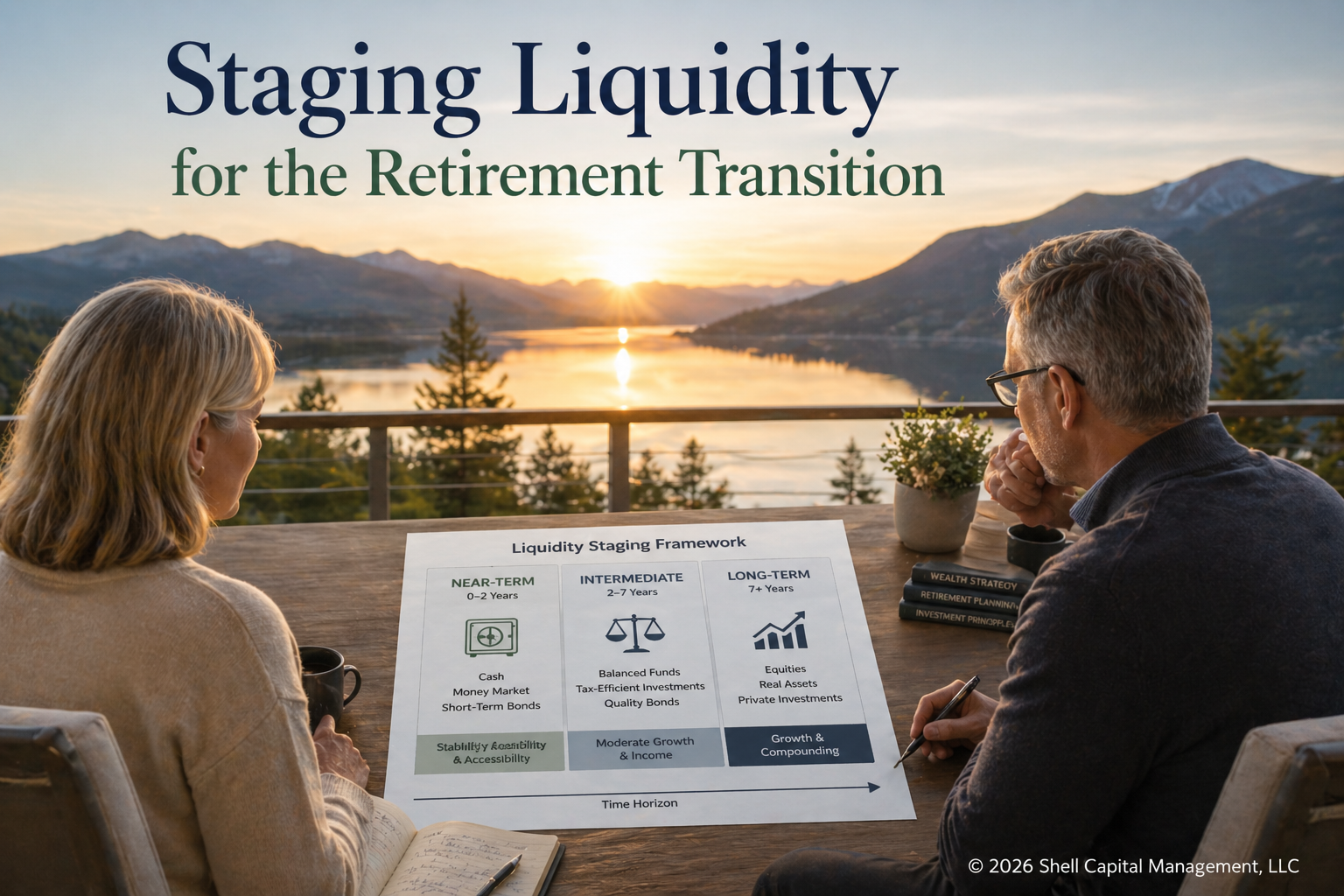
A more disciplined approach stages liquidity across time horizons.
Near-term needs are supported by assets designed for stability and accessibility. Intermediate needs are aligned with moderate risk. Long-term assets retain growth exposure.
This structure creates flexibility.
If markets decline, spending can be funded from stable sources. Growth assets can remain invested, preserving long-term compounding.
For physicians, founders, and executives, liquidity planning is often complicated by concentrated positions or illiquid assets. This makes pre-retirement staging even more important.
Liquidity is not simply a buffer. It is a strategic component of retirement design.
Properly structured, it reduces forced decisions and preserves optionality during periods of uncertainty.

Written by Christi Shell, CWS®, AAMS®, BFA™, CETF®, Managing Director and Private Wealth Strategist at Shell Capital Management, LLC.
To speak with Christi about your financial situation, request a private consultation.
Shell Capital Management, LLC is a registered investment adviser. This material is for informational and educational purposes only and does not constitute investment, legal, or tax advice. Advisory services are only offered to clients or prospective clients where Shell Capital Management, LLC is properly registered or exempt from registration. Any views are as of the date published and may change. Investing involves risk, including the possible loss of principal. Past performance is not indicative of future results.