
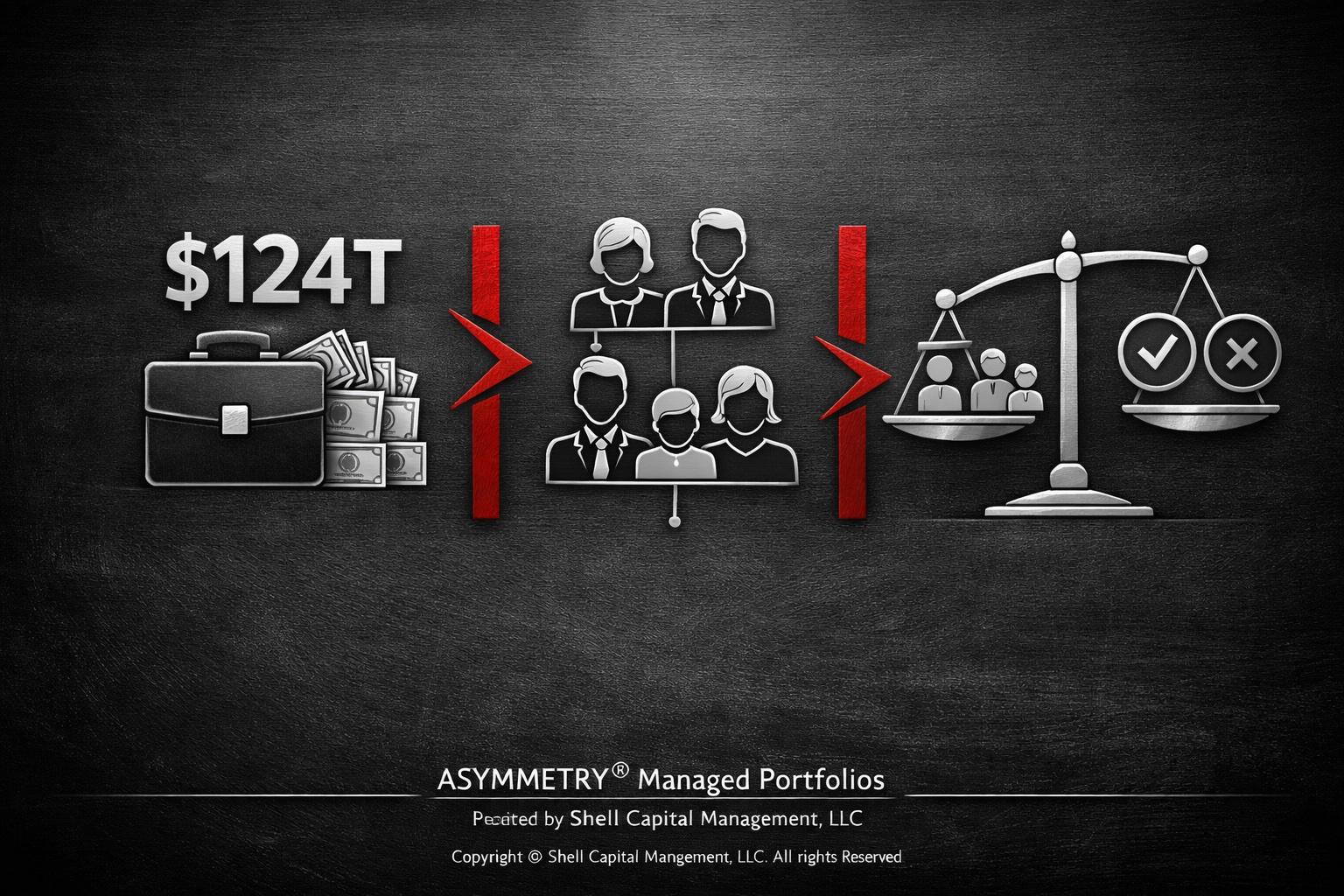
The Great Wealth Transfer: Opportunity or Transition Risk?
Over the next two decades, the United States will experience the largest generational wealth shift in modern history. According to Cerulli Associates, roughly $124 trillion is expected to transfer through 2048. About $105 trillion will move to heirs and $18 trillion to charitable causes. Nearly 81% of that wealth will come from Baby Boomers and older generations.
On paper, it sounds like a massive inheritance event.
In reality, much of this wealth is tied up in privately held businesses built over decades by founders who took risks, reinvested profits, and built companies that became the financial backbone of their families.
That makes this less about transferring money and more about transferring leadership, responsibility, and operational control.
And that transition is rarely simple.
The Hidden Concentration Risk
For many entrepreneurs, the business represents the majority of their net worth. Exit Planning Institute estimates business owners often have around 80% of their wealth tied up in their company.
That concentration changes the equation entirely.
Unlike public investments that can be liquidated or diversified, privately held businesses require buyers, management transitions, and carefully structured succession plans. Without those pieces in place, the wealth on paper may not translate into real liquidity for the family.
In other words, the wealth transfer assumes the business survives the transition.
That assumption doesn’t always hold.
The Succession Planning Gap
Despite the scale of the coming transfer, many businesses remain unprepared for leadership transitions.
PwC’s U.S. Family Business Survey found that only 34% of family businesses report having a robust, documented, and communicated succession plan.
That means the majority of businesses approaching generational transition lack a clear roadmap for who will lead, how ownership will transfer, and how decision-making authority will evolve.
Without that clarity, families often find themselves forced into reactive decisions—selling businesses quickly, transferring control prematurely, or allowing internal conflict to weaken the organization.
Succession failures rarely happen overnight. They usually unfold slowly through uncertainty, leadership gaps, and unresolved family dynamics.
Why Business Transitions Are So Difficult
Transferring a business is fundamentally different from transferring financial assets.
Businesses carry operational complexity, employee relationships, customer expectations, and leadership responsibilities that cannot simply be inherited.
They also carry emotional weight.
For founders, the company is rarely just a financial asset. It represents years of sacrifice, risk-taking, and personal identity. Stepping away from the business can feel like stepping away from purpose.
Meanwhile, the next generation may inherit ownership without necessarily inheriting the same passion, experience, or desire to lead the company.
Those differences can create friction inside families, particularly when expectations are never clearly discussed.
The Compressed Timeline Problem
Another risk comes from timing.
Many founders delay succession planning because the business is still thriving or because stepping back feels premature. But leadership transitions require time.
Developing the next generation of leadership often takes years of mentorship and operational experience. Ownership transfers must be structured carefully to address taxes, governance, and family equity.
When planning starts too late, the transition becomes compressed into a short time frame.
That compression increases the probability of mistakes.
The Human Side of the Wealth Transfer
Behind every business transition are people whose lives are tied to the outcome.
Employees depend on stable leadership. Families depend on financial continuity. Communities often depend on the businesses that support local economies.
When a transition fails, the consequences extend far beyond the balance sheet.
That’s why the wealth transfer conversation should not focus solely on inheritance. It must also focus on leadership development, governance structures, and long-term planning.
Turning a Transfer Into a Strategy
Despite the challenges, generational transitions can be successful when approached intentionally.
Owners who begin planning early can develop leadership within the next generation, create governance frameworks, and structure ownership transitions that protect both the business and the family.
The key is recognizing that wealth built through entrepreneurship carries a different set of risks and responsibilities.
The Great Wealth Transfer will move trillions of dollars across generations.
But whether that wealth is preserved, diluted, or lost will depend less on the amount being transferred and more on how well families prepare for the transition that comes with it.
Mike Shell founded Shell Capital Management, LLC in 2004.