Reflexivity in Financial Markets – How Feedback Loops Drive Asymmetry
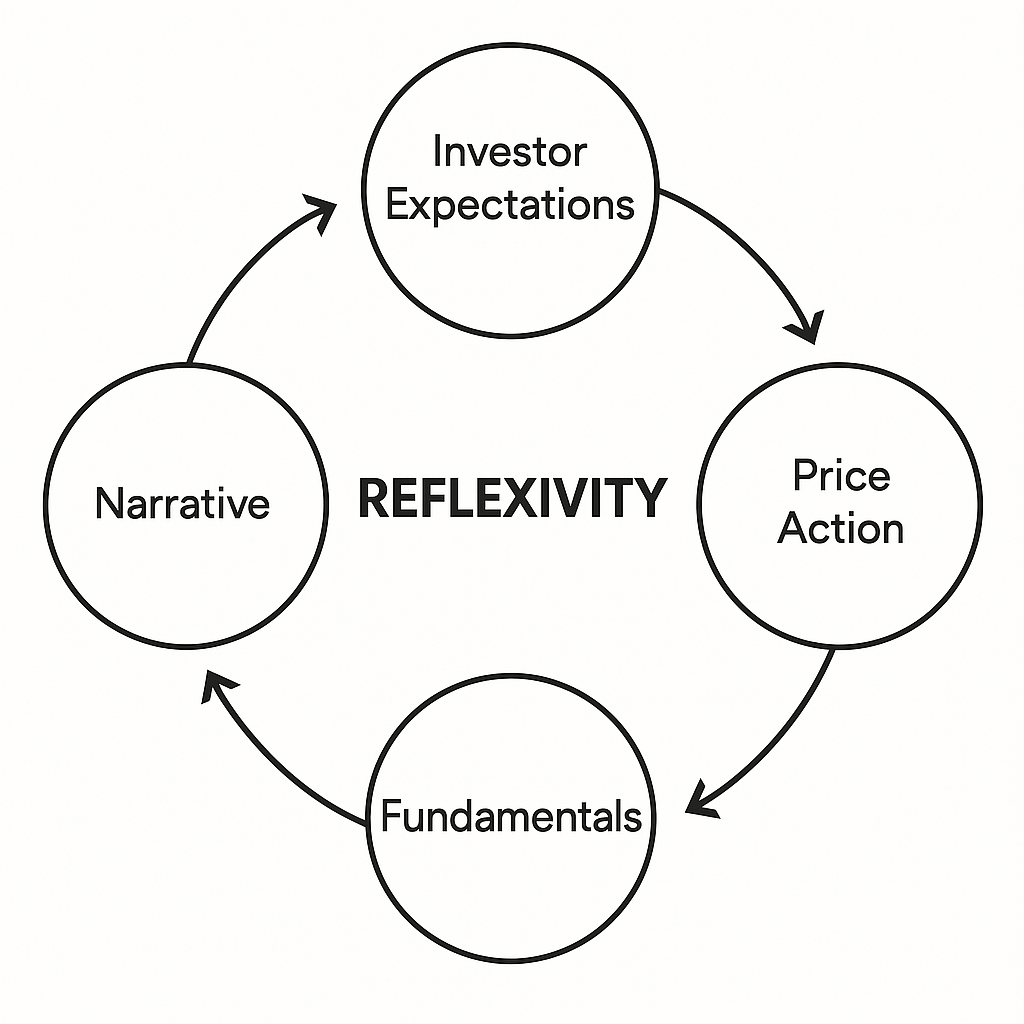
Reflexivity is more than a Soros buzzword—it’s a market structure principle that helps explain both bubbles and crashes, trend persistence, and volatility clusters.

Reflexivity is more than a Soros buzzword—it’s a market structure principle that helps explain both bubbles and crashes, trend persistence, and volatility clusters.
Systematic flows can move markets far more than headlines. Recognizing the impact of volatility-targeting strategies, CTA trend signals, and leveraged ETF rebalancing allows traders to step into the chaos with a defined edge.
Morningstar’s model says the U.S. equity market is undervalued by 6.7%. But valuation without a clear exit is not a strategy—it’s a liability.
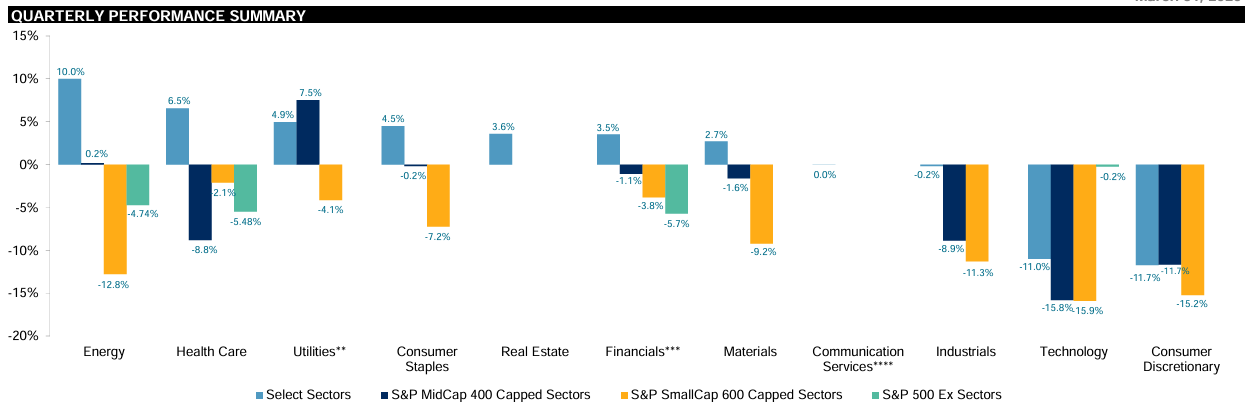
Sector dispersion is a gift to the asymmetric investor. When sectors diverge this sharply in trend, volatility, and valuation, the environment rewards those who are willing to rotate tactically and structure trades to capture exponential upside while controlling downside risk. We may use this data to identify setups with capped downside and high upside optionality—hallmarks of true asymmetry.
When industry performance disperses this widely, the opportunity for asymmetric positioning multiplies. Whether through long/short pairs, structured options, or sector rotation with predefined exits, we may use this dashboard data to seek positive asymmetry—capping downside while preserving exponential upside. At Shell Capital, this is the edge we pursue in dynamic markets.
You wouldn’t know it from watching the VIX index alone, but something interesting is happening beneath the surface. The VIX futures curve — the structure that really drives volatility-linked products like VXX, VIXY, and UVXY — is showing signs of indecision. Here's what it means for asymmetric hedging.
Discover how the latest S&P 500 Equal Weight Sector Dashboard reveals asymmetric opportunities for investors. Learn why equal weight indices may outperform cap-weighted benchmarks in the current regime, how factor tilts like size and value create imbalance, and how dispersion and concentration risk impact portfolio heat. This analysis explores sector rotation, volatility, and factor exposures—through the lens of Shell Capital’s ASYMMETRY® investment strategy.
Discover asymmetric investment insights from the March 2025 S&P Dispersion, Volatility & Correlation Dashboard. Learn how elevated volatility, low dispersion, and rising global correlations create opportunities for volatility reversion trades, convex option strategies, and portfolio-level asymmetry. Explore how small caps, emerging markets, and tactical hedging may offer defined-risk setups with exponential upside.
Institutional fund flows, futures positioning data, and ETF rotation trends may help reveal where market participants are concentrated—and where asymmetric opportunities could emerge. By analyzing institutional fund flows and futures positioning across asset classes, we may identify regime shifts, crowded trades, and potential setups offering convexity, optionality, and favorable asymmetry with predefined risk and exponential upside.
Many options-based funds like Buffered, Overlay, and Defined Outcome ETFs promise downside protection with upside potential—but most fail to deliver true asymmetry. Here's why.
The Federal Open Market Committee (FOMC), which sets U.S. monetary policy by adjusting interest rates, unanimously voted to keep the fed funds rate in the 4.25%–4.5% range in March. The most notable change in the post-meeting statement was the addition of a new clause: “Uncertainty around the economic outlook has increased.” It's an illusion of asymmetric insight.
The stock market is a constant battle between buying pressure and selling pressure, and recently, that battle has shifted in a meaningful way. After a strong rally earlier in the year, we’ve now seen a notable change in the risk/reward asymmetry. Markets don’t move in a straight line, and shifts in trend strength often signal the potential for new opportunities—or new risks.
The global fixed-income landscape is at a key inflection point, with notable divergences emerging across major bond markets. While U.S. Treasury yields show signs of trend exhaustion, other developed market bonds are stabilizing at key technical levels. These shifts create asymmetric opportunities for tactical investors who focus on structuring trades with predefined downside risk and significant upside potential.
The latest report on the U.S. economy provides insights into the strength of the services sector and manufacturing activity amid ongoing tariff uncertainties. The ISM Services Index saw an uptick, while factory orders aligned with expectations, offering a mixed economic signal. Here’s what investors need to know.
Howard Marks has a unique ability to distill complex market dynamics into clear, actionable insights, and his latest memo, "On Bubble Watch," is no exception. It’s a powerful reminder of the importance of recognizing the telltale signs of a market bubble, the psychology driving it, and the necessary caution that comes with it.
Ray Dalio and Elon Musk see the U.S. debt problem for what it is: an unsustainable ticking time bomb. They aren’t just speculating—they’re using decades of experience in finance, economics, and business to sound the alarm.
Today, as we find ourselves in one of the tightest credit spread environments in decades, it's worth asking: Are investors underpricing risk, and does this present an asymmetric opportunity?
A robust asymmetric trading system isn’t one that just works; it’s one that reliably produces asymmetry across different market conditions while maintaining an edge. Positive expectation, repeatability, and adaptability.
Weakening trend strength, the expiration of massive options positions, and looming systematic flows have created an asymmetric risk-reward setup where downside risks outweigh near-term upside potential.
Goldman Sachs' latest Hedge Fund Trend Monitor offers a deep dive into the positioning of 695 hedge funds, managing $3.1 trillion in gross equity positions. The report reveals key shifts in hedge fund strategies at the start of 1Q 2025, highlighting selectivity in sectors, thematic rotations, and increasing leverage.