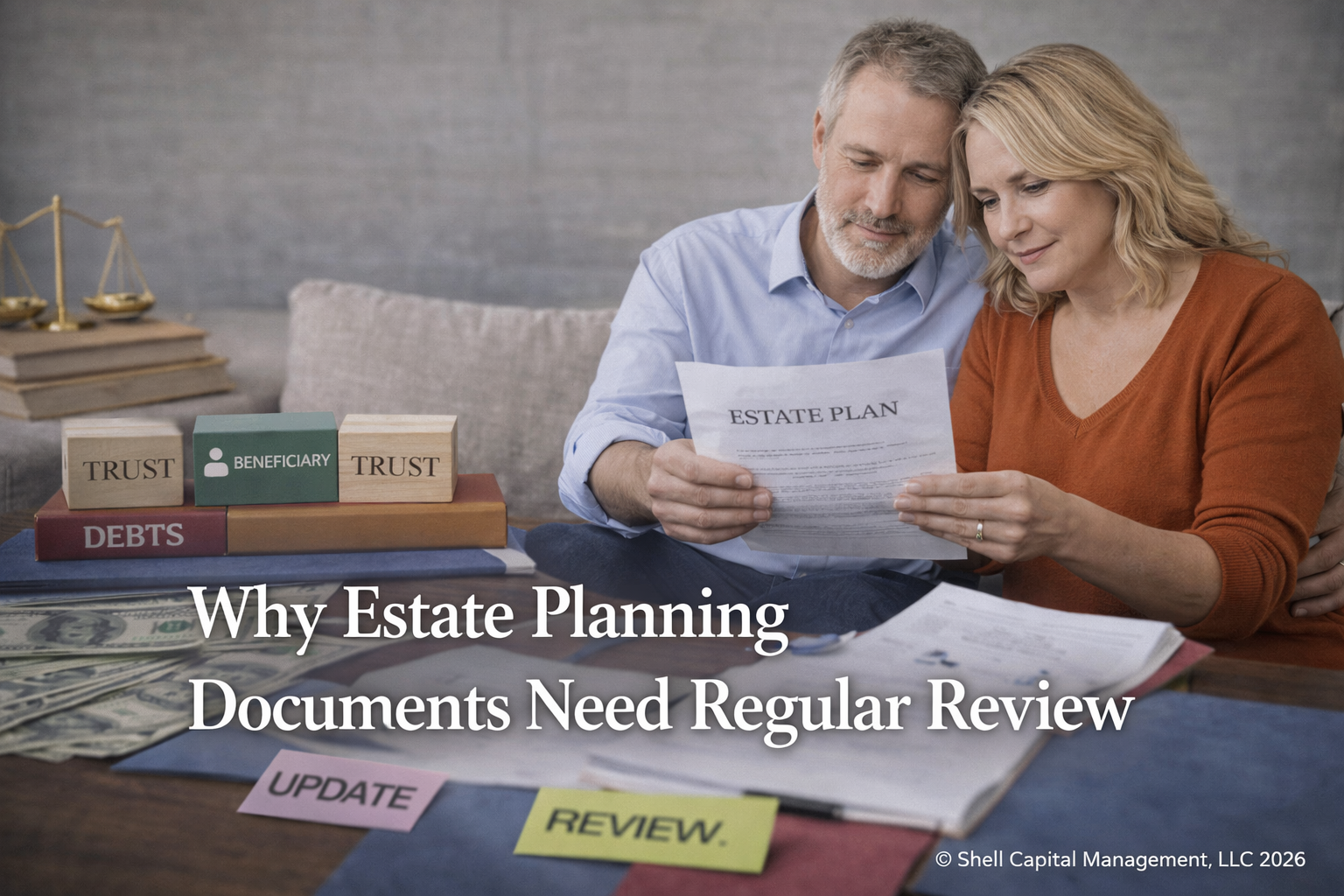
Why Estate Planning Documents Need Regular Review
Estate planning is not a one-time event. As life circumstances change, estate planning documents should be reviewed to ensure that distribution instructions remain aligned with current goals.

Private Wealth Strategist is where Christi Shell, Certified Wealth Strategist®, shares insights from her work advising business owners, physicians, executives, and families responsible for meaningful capital.
Families with complex financial lives eventually face a consistent set of wealth decisions—how to structure a business exit, how to reduce tax drag, how to protect assets from liability, how to generate retirement income, how to transfer wealth efficiently to heirs, and how to support family, philanthropic, and legacy goals.
Private Wealth Strategist explores those issues through the lens of integrated wealth strategy. Articles address topics such as investment strategy and portfolio management, tax planning, risk management and insurance, asset protection structures, executive compensation and stock options, business succession planning, education and family support, charitable giving strategies, retirement planning, estate distribution, and liquidity or credit management.
Rather than treating these decisions in isolation, Private Wealth Strategist examines how they interact—because the structure of one decision often shapes the outcome of another.
Christi Shell serves as Managing Director and Private Wealth Strategist at Shell Capital Management, LLC.
Estate planning is not a one-time event. As life circumstances change, estate planning documents should be reviewed to ensure that distribution instructions remain aligned with current goals.

Estate plans are designed to simplify the transfer of wealth. When key elements are not coordinated, however, distribution can become more complex and time-consuming than expected.

Estate planning documents matter, but asset ownership often determines how property is transferred. Titling and beneficiary designations play a major role in estate distribution.

Trusts are often central to estate distribution planning. They allow assets to be managed by a trustee and distributed according to instructions that continue long after the estate is settled.

Estate planning documents define how wealth should transfer, but fiduciaries are responsible for carrying out those instructions. Choosing the right executor and trustee is an important decision in the estate distribution process.


Estate distribution planning determines how wealth, control, and responsibility transition at death. Without a structured plan, state intestacy laws provide a default framework that may differ significantly from the individual’s intentions.

Estate distributions rarely occur immediately. Learn why estate administration—including asset identification, debt settlement, and tax filings—can take time before beneficiaries receive assets.

This blog will talk about the financial implications and the emotional considerations of receiving an inheritance windfall.

Tennessee estate planning adviser shares a guideline for how often investors should review their estate strategy and also include some important life changes that should prompt an immediate review.

Tennessee financial advisor offers tips on how adult children can approach the conversation of finances with their aging parents.

This blog will be about filing a final tax return for a loved one who has passed away. It includes information that the person filing will need and discusses how to make the process easier.

A look at the estate tax advantaged trust, the Intentionally Defective Grantor Trust.

As the new year quickly approaches, make sure you’re prepared with your year-end giving strategy checklist.