
Employee Stock Purchase Plans: How Section 423 ESPPs Create Discounted Ownership
ESPPs can systematically build ownership in employer stock—often at a discount. But plan rules and tax timing shape the real outcome.

Private Wealth Strategist is where Christi Shell, Certified Wealth Strategist®, shares insights from her work advising business owners, physicians, executives, and families responsible for meaningful capital.
Families with complex financial lives eventually face a consistent set of wealth decisions—how to structure a business exit, how to reduce tax drag, how to protect assets from liability, how to generate retirement income, how to transfer wealth efficiently to heirs, and how to support family, philanthropic, and legacy goals.
Private Wealth Strategist explores those issues through the lens of integrated wealth strategy. Articles address topics such as investment strategy and portfolio management, tax planning, risk management and insurance, asset protection structures, executive compensation and stock options, business succession planning, education and family support, charitable giving strategies, retirement planning, estate distribution, and liquidity or credit management.
Rather than treating these decisions in isolation, Private Wealth Strategist examines how they interact—because the structure of one decision often shapes the outcome of another.
Christi Shell serves as Managing Director and Private Wealth Strategist at Shell Capital Management, LLC.
ESPPs can systematically build ownership in employer stock—often at a discount. But plan rules and tax timing shape the real outcome.

Equity compensation can intersect with estate and charitable planning, but option type matters. ISOs carry structural limits, while NQSOs introduce flexibility—with different tax consequences.
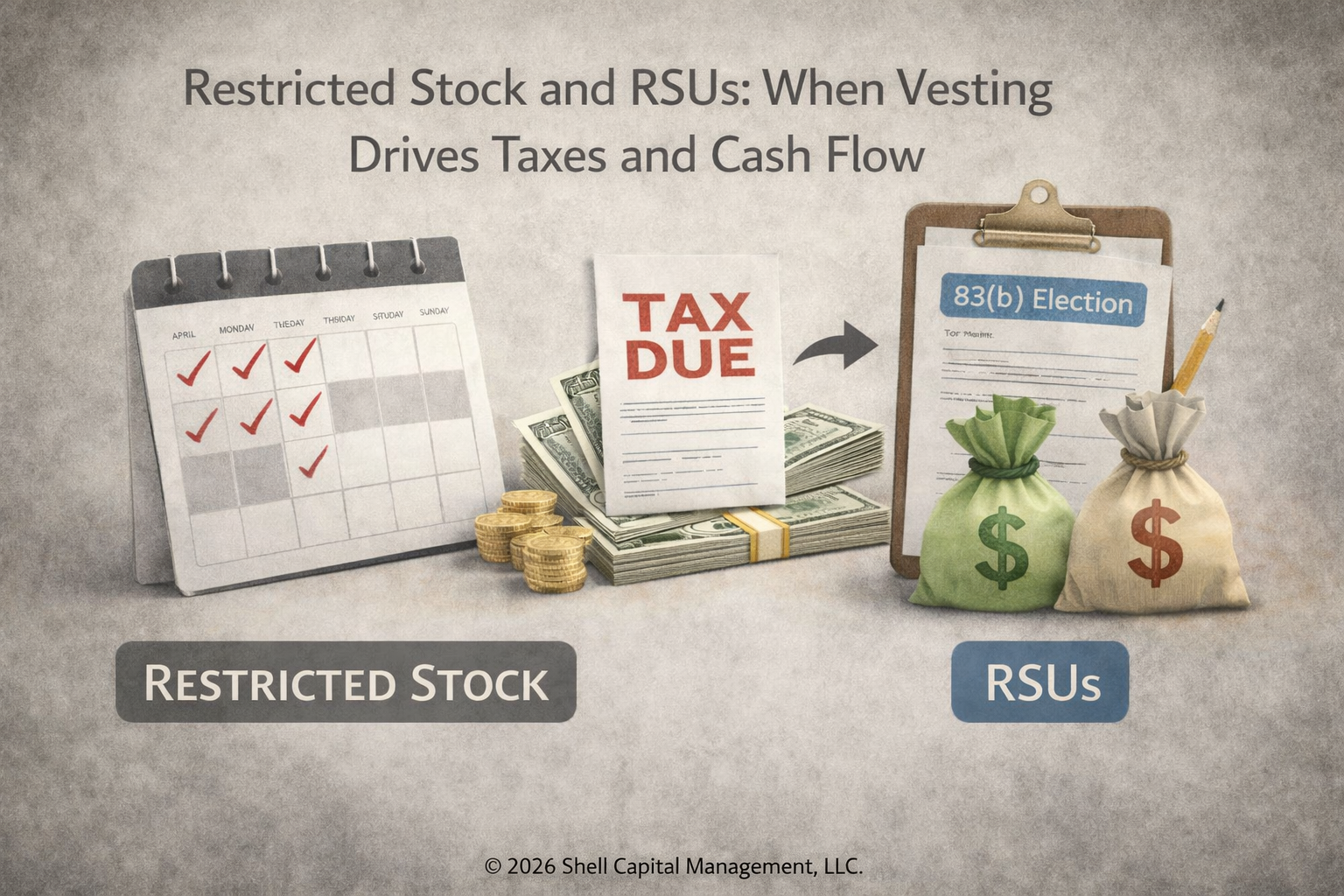
Restricted equity simplifies ownership mechanics, but shifts complexity to timing. Vesting schedules—not market decisions—often drive tax outcomes.

Nonqualified stock options offer flexibility but typically generate ordinary income when exercised. Discounted options can also trigger Section 409A penalties.

Exercising stock options often requires substantial liquidity. Funding choices—cash, borrowing, or pyramiding—can significantly affect portfolio risk and planning outcomes.

Incentive stock options can shift value toward capital gains treatment, but only when specific holding periods are satisfied. Missing those timing rules can quickly change the tax result.

Incentive stock options may receive favorable tax treatment if specific eligibility rules, pricing requirements, and annual limits are satisfied.

Nonqualified deferred compensation arrangements offer tax deferral opportunities, but Section 409A imposes strict timing and documentation rules that executives must understand.
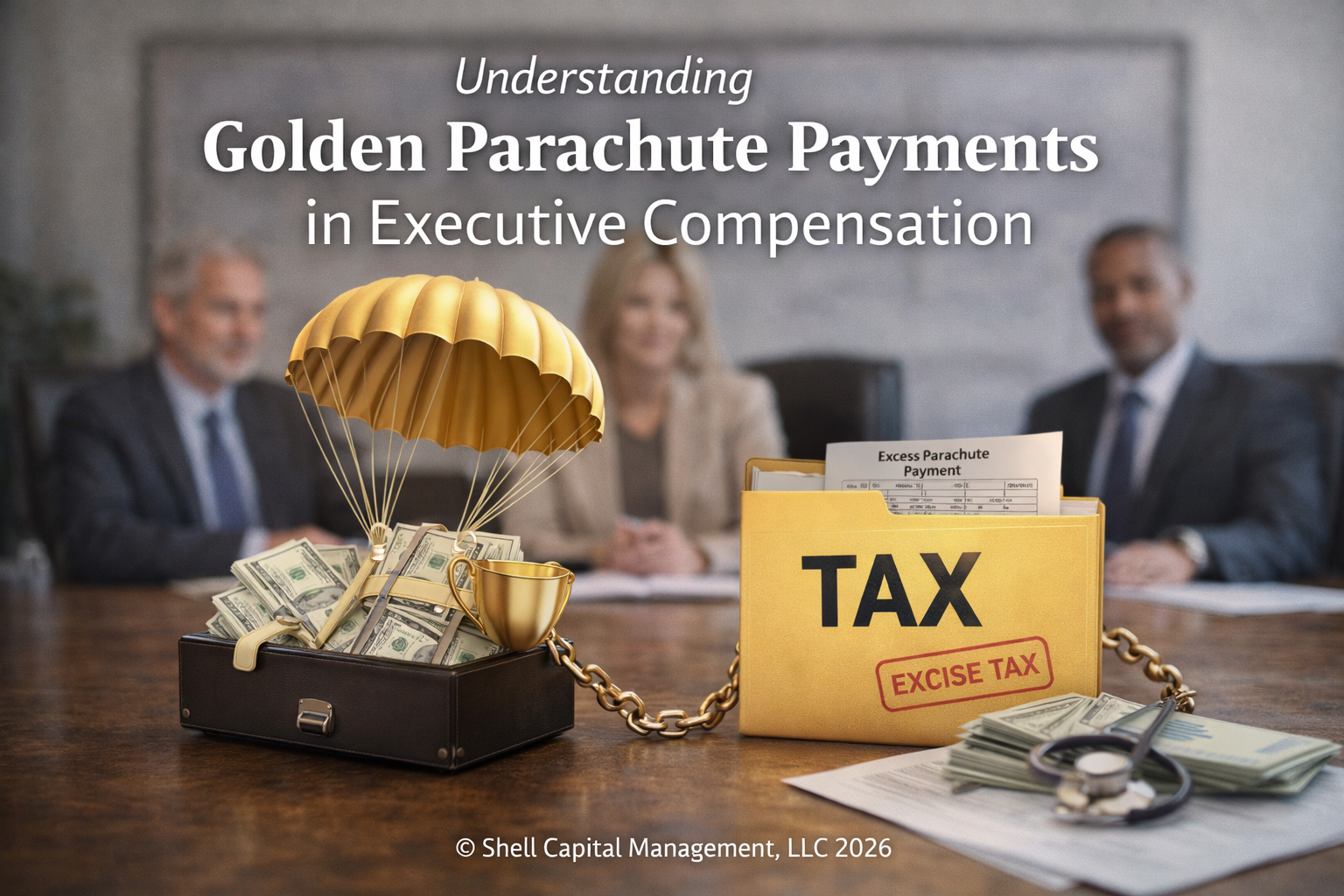
Golden parachute payments are compensation arrangements triggered by mergers or changes in company ownership. Understanding how these provisions work can help executives evaluate potential tax consequences.

Executive stock options are influenced by four critical dates that determine when options may be exercised and how compensation is realized.

The Dodd-Frank Act introduced several rules that influence executive compensation, including shareholder votes, compensation committee independence, and clawback policies.

Executive compensation packages typically combine several different forms of pay. Understanding the structure of these components can help executives evaluate how their compensation aligns with long-term financial goals.